Williamsport, Pennsylvania

North Central PA has the ability to be a tricky forecast, because it is squeezed between the Atlantic and Great Lakes, all while nestled in the folds of the Allegheny Mountains. Tricky!

At 954PM, ET, Williamsport was reporting a temperature of 55 degrees with clear skies. The cool temperatures, valley location and clear skies are all ingredients that will lead to overnight fog.
A stout ridge lays over the Mid-Atlantic, despite a strong trough attempting to move in from the northern Plains. Eastern Pennsylvania will remain clear and fairly sunny through midweek while the boundary and trough dissipate and stall, respectively. Flow will become more southerly, however, leading to a warmer day on Wednesday in Williamsport.
Tomorrow – Mostly sunny, High 73, Low 48
Wednesday – Mostly sunny and warmer. High 81, Low 54

TWC: Tomorrow – Partly cloudy skies. High 74, Low 46
Wednesday – A shower or two possible early with partly cloudy skies in the afternoon. High 81, Low 55

AW: Tomorrow – Mostly sunny in the morning followed by sun and areas of high clouds; pleasant with low humidity HIgh 74, Low 46
Wednesday – Sun through high clouds High 79, Low 53

NWS: Tomorrow – Patchy fog before 9am. Otherwise, sunny, High 74, Low 45
Wednesday – Areas of fog before 10am. Otherwise, mostly sunny, High 81, Low 52

WB: Tomorrow – Patchy fog in the morning. Sunny. High 73, Low 50
Wednesday – Patchy fog in the morning. Mostly sunny. High 80. Low 55

WN: Tomorrow – Mostly sunny, High 73, Low 45
Wednesday – Partly cloudy, High 80, Low 52

CLI: Tomorrow – Sunny, High 72, Low 47
Wednesday – Light rain showers, High 79, Low 55

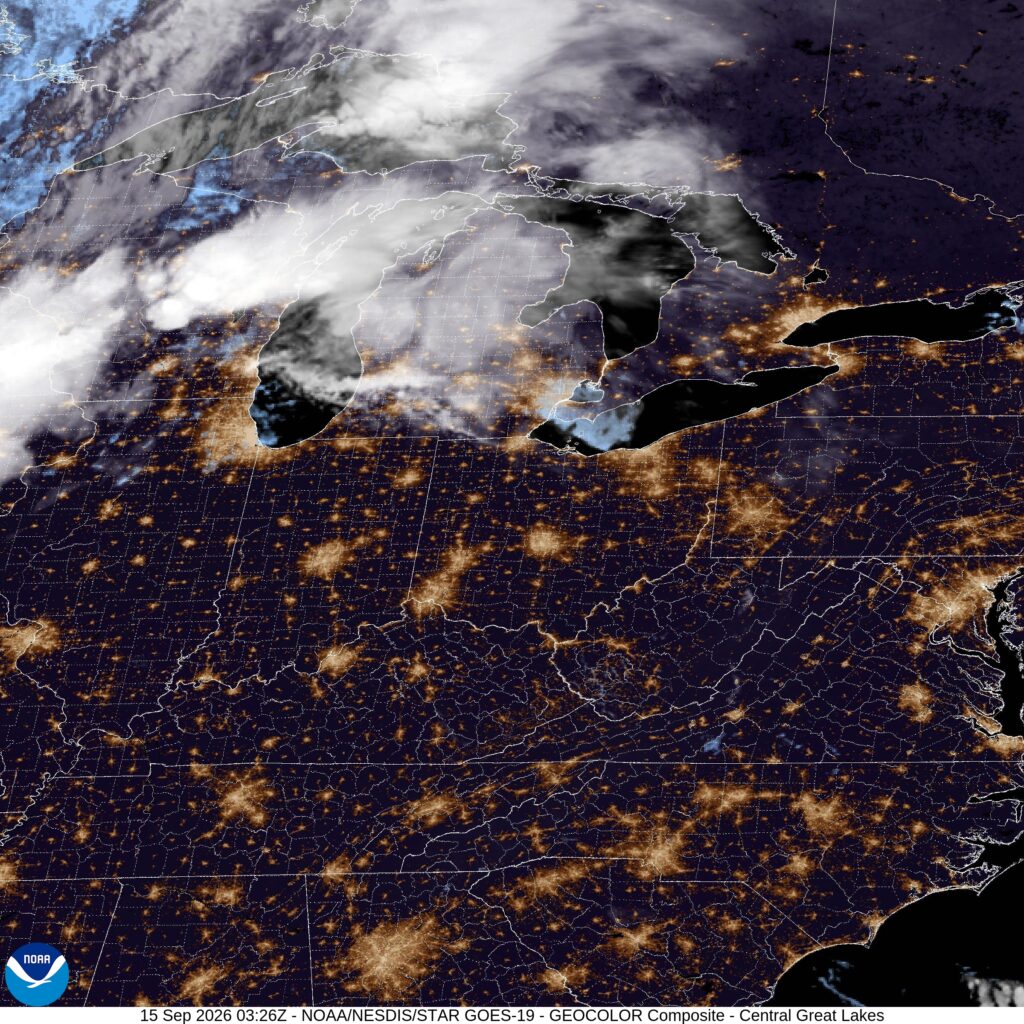
Those smatterings of rain showers are particularly interesting to me. The radar and cloud cover are pretty empty tonight.
Updates 9/13

2:21PM: Here is an interesting dynamic. In eastern Washington, there are flood watches and advisories for the region, thanks to some steady shower activity. Meanwhile, in Oregon, there are forecasts and advisories counting for low water levels in the western part of the state. One hopes the water in eastern Washington will see water flow downstream towards the Oregon coast.

11:14PM: There was rain in the forecast from several outlets for Morristown, and it if happened, it’s gone now. Very dry tonight in Tennessee.

Burlington, North Carolina to Morristown, Tennessee

As we head into the weekend, how about a nice little drive through the mountains? Our drive will cover only 4 and a half hours and 276 miles. That’s a pace of 62 winding miles through the Appalachians and Smoky Mountains.

Burlington, North Carolina

This drive will take us north into Virginia so we can hitch a ride on I-81 and head into Morristown. There are going to be a pair of competing forces, including a weak area of low pressure in the Bight of Georgia, and a distant boundary in the Plains. They will have the same effect on either side of the mountain ridge: upslope winds, leading to scattered showers and storms. It will be showery for every leg of the drive on Saturday, but it won’t be a washout. It’s often rainy in this part of the world anyway, so we can’t complain a whole lot. The latter half of the weekend will be sunnier and warmer in Morristown.

Morristown, Tennessee

Morristown, Tennessee

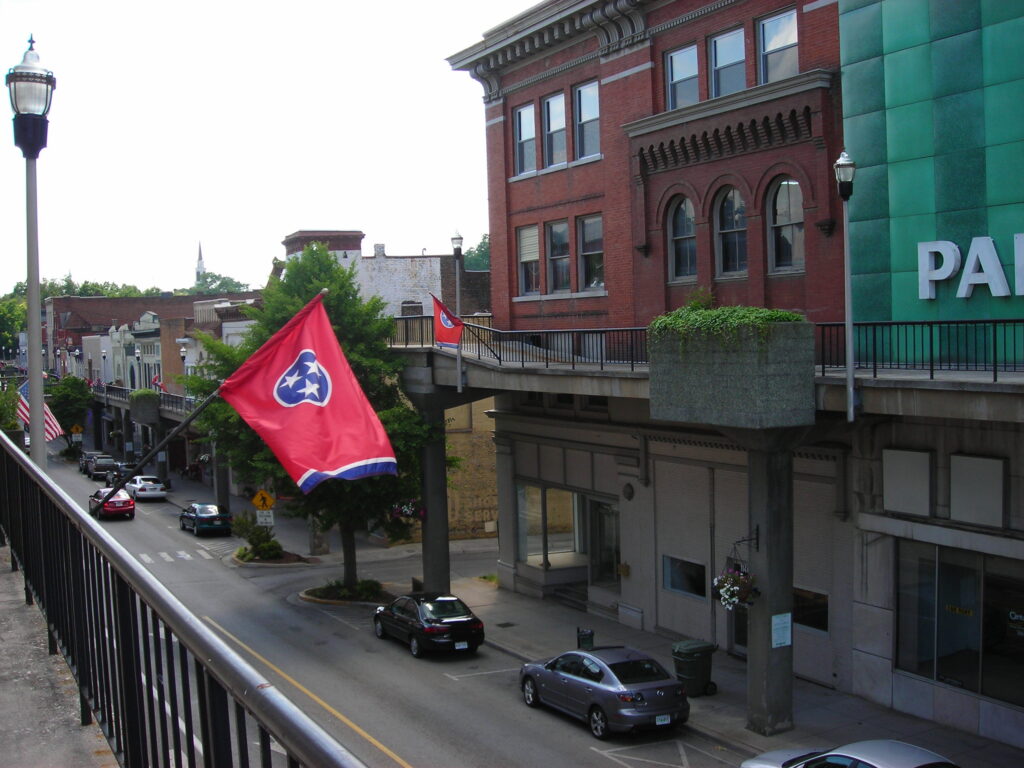
It’s time to journey to the mountains of eastern Tennessee this afternoon. Technically, I think it’s also northern Tennessee, but who can even say? It’s in that little finger pointing at the Virginia/North Carolina border.

At 1215PM, ET, Morristown was reporting a temperature of 86 degrees with clear skies. The tail of a remnant boundary was lingering over the Carolinas, and the Gulf was open to the Ohio Valley. Showers and scattered storms will be possible through the afternoon across the region, though Morristown should remain dry, thanks to the position of the town north and west of the Smokeys, however eyes should stay on the next feature moving into the Northern Plains.
As the boundary moves into the Upper Midwest, flow will redirect to become lightly southwesterly. The boundary itself will remain over the Great Lakes, but the moisture over the southeast will waft towards Morristown. There will be a chance of light showers on Saturday afternoon. As the feature shifts further east, the Gulf will close off, and clear skies will return to eastern Tennessee.
Tomorrow – Mostly cloudy, chance of afternoon showers, High 80, Low 69
Sunday – Early cloudy, then sunny, High 86, Low 68

TWC: Tomorrow – Scattered thunderstorms in the morning, then mainly cloudy during the afternoon High 81, Low 69
Sunday – Partly cloudy. A stray shower or thunderstorm is possible High 88, Low 66

AW: Tomorrow – Times of clouds and sun with a couple of showers and a thunderstorm; humid; thunderstorms can bring gusty winds and ponding on roadways High 81, Low 69
Sunday – Times of clouds and sun with widely separated thunderstorms; humid High 85, Low 69

NWS: Tomorrow – A chance of showers and thunderstorms, then showers likely and possibly a thunderstorm after 2pm. Cloudy, then gradually becoming mostly sunny High 86, Low 69
Sunday – A 30 percent chance of showers, mainly before 8am. Mostly sunny, High 87, Low 67

WB: Tomorrow – Mostly cloudy with a chance of showers with a slight chance of thunderstorms in the morning, then showers with a chance of thunderstorms in the afternoon. High 81, Low 71
Sunday – Mostly sunny. A slight chance of showers in the morning. High 87, Low 70

WN: Tomorrow – Mostly cloudy with light showers and a chance of storms, High 86, Low 69
Sunday – Partly cloudy with scattered showers, High 87, Low 67

CLI: Tomorrow – Thunderstorm, High 82, Low 70
Sunday – Light rain showers, High 87, Low 69

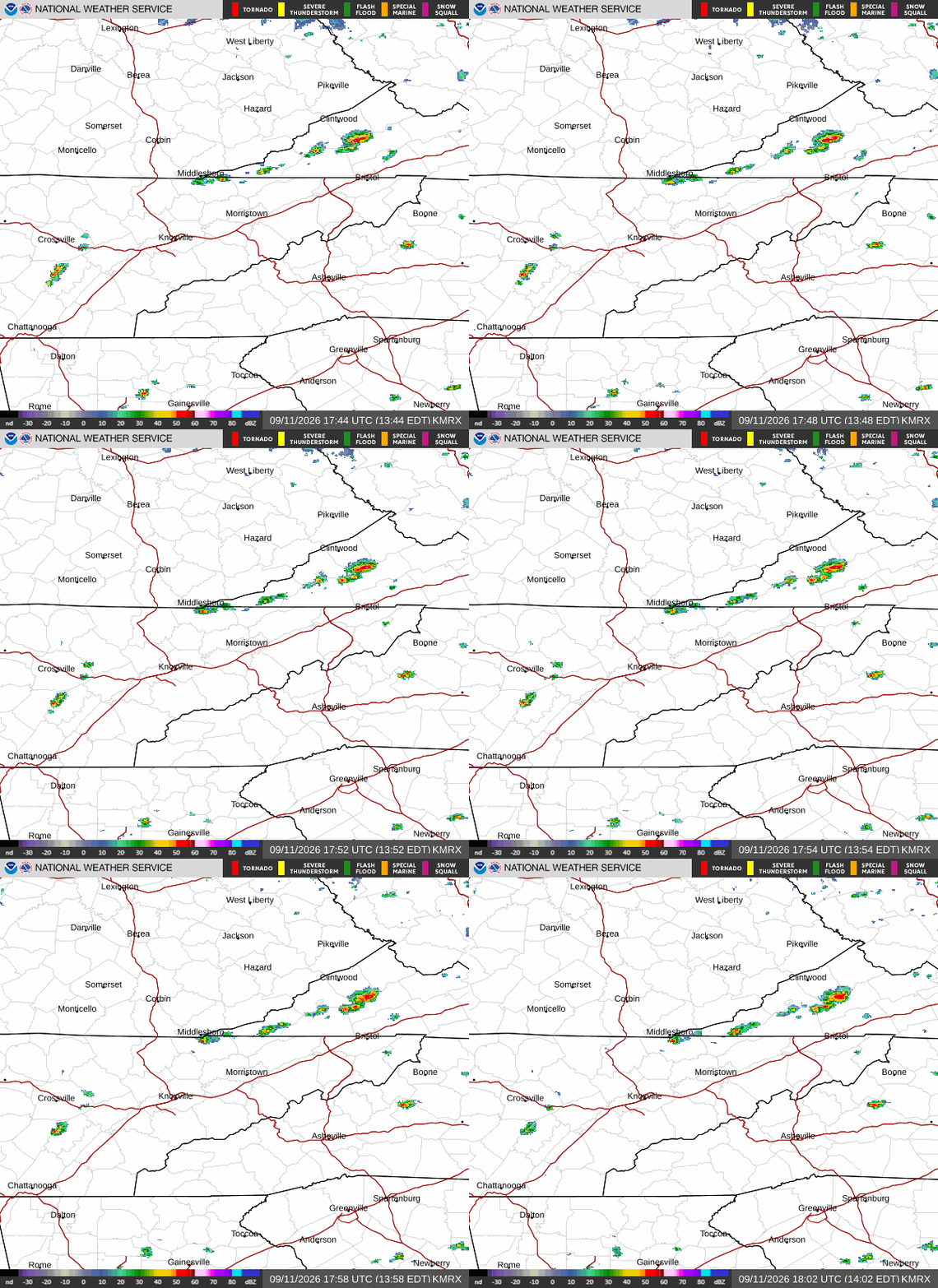
I’m surprised the other outlets are calling for rain on Sunday. It seems like it will be a bit of a challenge. Here is the radar, showing a couple of pop up storms in southern Kentucky.

Hawai’ian History

I just posted about the unusually quiet Atlantic hurricane season. All good there, even a day later. We don’t often talk about the tropical season in the Pacific, because the gyre of the ocean usually keeps storms further to the south, and the general flow of the tropics is east to west, away from the North American mainland. There can be storms that veer poleward, striking the Mexican coast, but the Mexican Pacific is typically quieter than the Mexican Atlantic, particularly the Yucatan Peninsula.

There is one other territory out there, however. Hawai’i sits all by it’s geographic lonesome in the middle of the Pacific Ocean. Typically, hurricanes remain to the south of Hawaii, or never can sustain themselves far enough to the west to afflict the Aloha State. This year, the state has been impacted by two.

Hurricane Lala danced around the the southern coasts of the islands, causing it’s greatest impact to the Big Island, where 4 deaths were attributed to the storm. The greatest issue here was the heavy rain and flooding, though the high winds certainly caused issues of their own, including down power lines in Oahu. On the north side of Hawai’i (the island) one site reported 43″ of rain! While this site was on the north shore, LaLa passed on the south side of the the chain, which is the leeward side of the islands, and does not receive anywhere close to the rainfall seen on the windward side.

Lala was the first hurricane to impact the Big Island since 1871, if that give you an idea of how rare that is. So now that Hurricane Lowell is bearing down on Kauai, this hurricane season is truly remarkable in Hawai’i. Lowell, like Lala, won’t make landfall on the island, but it is forcing the National Weather Service to do something that I don’t know they have ever done: They issued a tornado watch for Kauai and the surrounding waters.

Lowell, as charted from the image pulled from his Wikipedia page, has taken a hard turn to the north towards the islands, and will likely be a hurricane when he makes his pass. Hurricanes often produce tornadoes, but Lala, for example, didn’t have the same rotation and pressure depth Lowell currently does. Given the threat of tornadoes from hurricanes, a watch absolutely makes sense, but Hawai’i’s place in the tropics, and it’s previous ability to avoid tropical storms makes this an incredible rarity.

Also, it’s a lesson for me, even. The Storm Prediction Center only covers the Continental US. Alaska has never had a tornado watch, and until now, neither has Hawai’i, and it was issued by the forecast office in Honolulu.

Lowell will continue to shift north and west. Tornadoes are scary, especially for a part of the world that doesn’t have basements or shelters, however the primary threat, like with Lala, will be rain and flash flooding. Hawai’i contains islands of volcanic origin, so they are filled with rugged terrain and narrow valleys. The leeward side will collect the brunt of the storm, and may sustain significant flood related damage. There will be some surge, but Hawai’i being isolated in the ocean means that water will have other places to go than inland.

Lowell will be off to bother the fish and birds by Tuesday afternoon, and subsequently weaken before hooking back to the east to batter Midway. This is an historic event for the Islands, and a real test for residents there.

No Jinxes

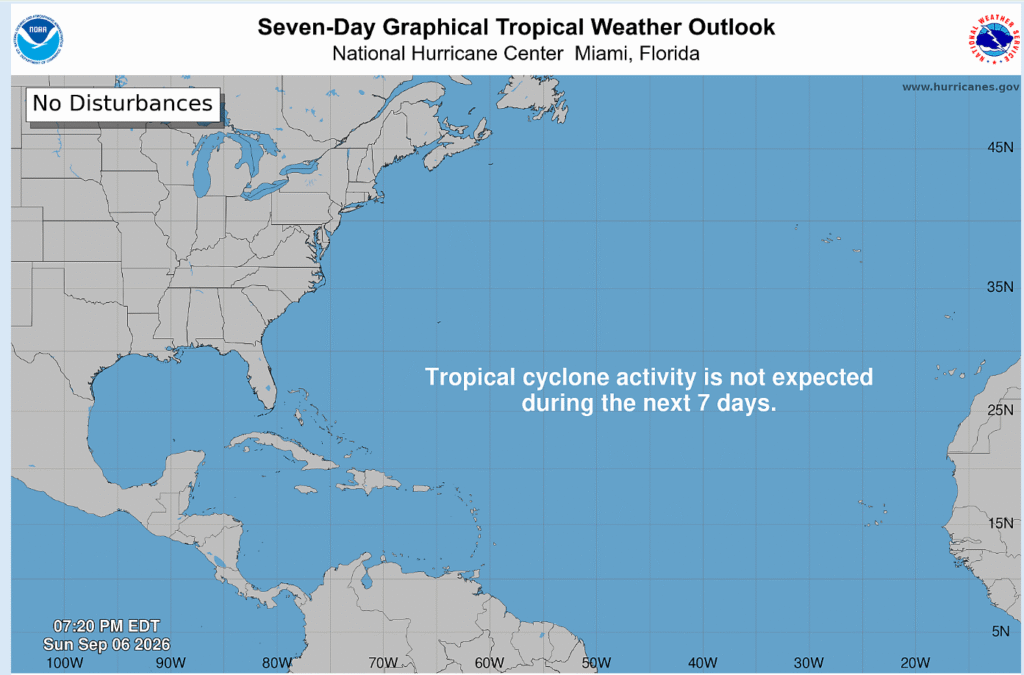
I don’t want to jinx anything. I’ve been around long enough to know that there is no such thing as a jinx, but I also have seen enough that I can’t fully be sure. All that said, it is 4 days until the traditional peak of the north Atlantic Hurricane season. So far, we have seen no hurricanes. The strongest storm was Tropical Storm Bertha, and even I don’t remember that one.

The best part? The outlook remains clear, at least for the next 7 days.

I post this with my typical caveat. Even though the hurricane season has been very quiet thus far, it only takes one storm in the wrong spot to make it much more memorable.

Coming Soon…

Labor Day weekend approaches, and finally, every kid will be back to school. Where will the forecasts take us in the coming days?

Morristown, Tennessee
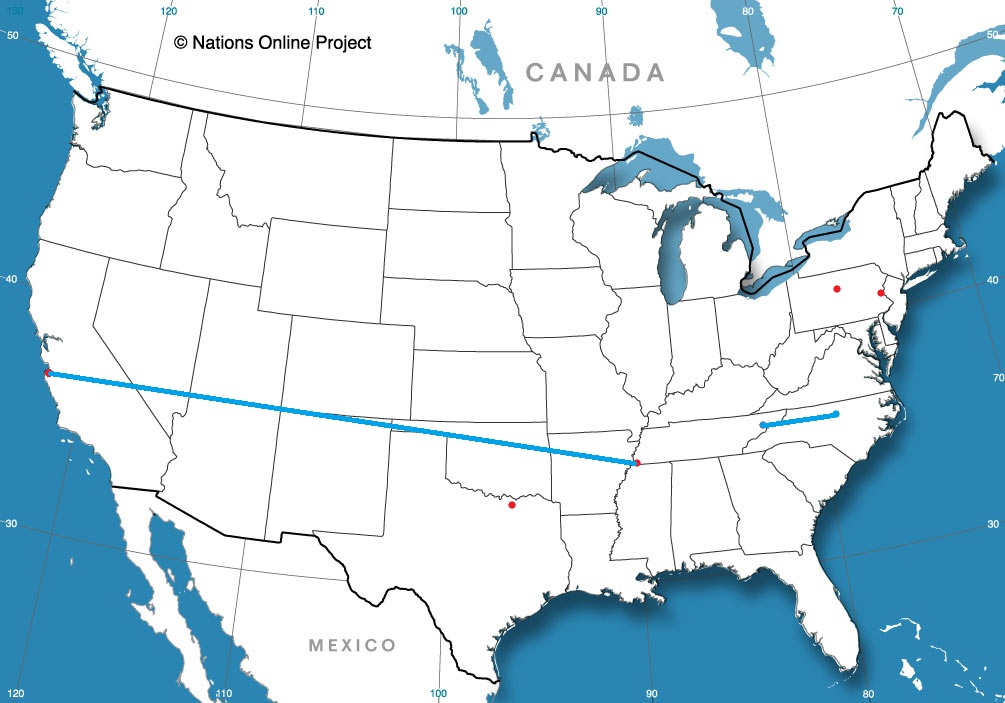
Road trip from Burlington, North Carolina to Morristown

Williamsport, Pennsylvania

Memphis Tennessee

Salinas, California
Road trip from Memphis to Salinas

Sherman, Texas

Allentown, Pennsylvania

August Forecaster of the Month

We have a timely, and fairly surprising forecaster of the month. The surprise is because out top point earner didn’t actually win any of the forecasts this month, but was consistently near the top, while the others were all over the map. Clime was imprecise, but only a little bit every time, and are our forecasters of the month.

Outlet Forecast Wins (year)
The Weather Channel 5.5
Accuweather 4.66
Victoria-Weather 4.33
WeatherNation 3.66
National Weather Service 2.83
Clime 2.66
Weatherbug 0.33

The two threats of late summer

This time of year is one of the more active. There is the most heat load in the oceans, so we see the rise of hurricane season, which will peak, on average, around September 10th. Also this time of year, the heat allows more moisture at higher levels of the atmosphere, which allows it to drift inland and participate in the season monsoon across the Rockies and the Southwest.

Because of the scope, ferocity and impact on high population areas, hurricanes tend to get the most attention, not only this time of year, but even when they are out of season. This season is offering a different perspective.

Tropical Depression Five is lingering off the coast of Louisiana, but otherwise, we are going to get to September without an Atlantic hurricane this year. The NHC and Colorado State predicted that we would see a below normal season this winter, but this is particularly quiet, a welcome change over the last several years.

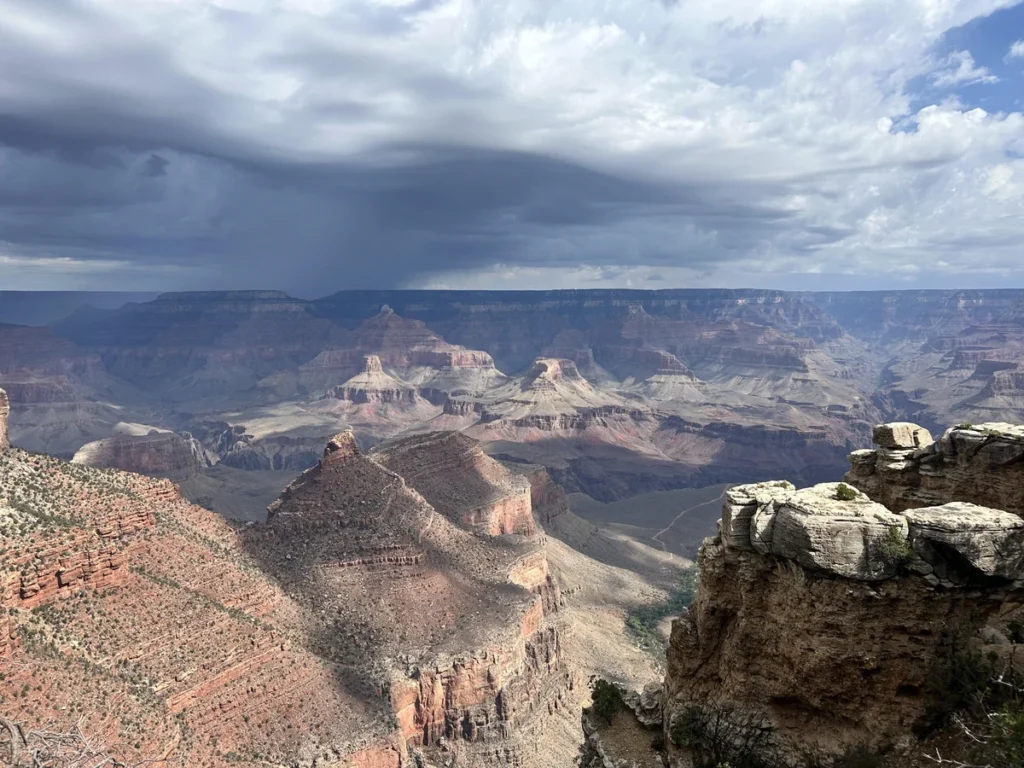
While the Caribbean and Gulf have been quiet, the Monsoon has been working on all cylinders. Monsoonal storms tend to crop up and hang out in place, thanks to a lack of motivational flow. Since they pop up, typically over a slope, and don’t move, there is a primary threat of flash flooding from these storms, as we have seen in the Grand Canyon.

Otherwise, Monsoonal storms fall on dry regions, and are famous for producing the haboobs and dust storms as the collapse under the weight of their own moisture content. Sandstorms are visually arresting, however this year looks to already be memorable for the torrential downpours. Flash flood watches and warnings are issued by the National Weather Service. Warnings in particular can be specific to individual valleys and riverways in their text, following the paths which floodwaters may take.